
Your Quick Answer …
Karate may offer benefits for children, extending beyond physical fitness to foster crucial life skills. Parents often find that consistent karate training may help their kids develop improved focus, self-discipline, and a greater sense of confidence.
Classes are structured, emphasizing safety through age-appropriate drills and controlled movements, providing a positive and secure environment for growth. It’s a structured outlet that may support both mental and physical development in a supportive community.
Why This Update?
Parents today are more intentional than ever about the activities they choose for their children. Questions around safety, structure, and long-term benefits matter more than tradition or reputation alone.
This latest update reflects current research on youth physical activity, modern karate class structures, and what parents are actually asking before enrolling their kids.
Jian’s ‘Take’
As a parent myself, it’s easy to feel overwhelmed by extracurricular options that promise confidence, discipline, or focus.
Karate stands out to me not because it guarantees outcomes, but because it offers structure in a way many kids respond well to.
The best programs don’t push children to be aggressive or competitive. They teach listening, patience, and self-control through repetition and clear expectations. That’s often what we are really looking for!
Why Parents Consider Karate for Their Children
Many parents turn to karate when they want their child to develop skills for their children that extend beyond the dojo (training hall). Self-confidence and self-esteem may develop as children master new techniques and earn recognition for their progress.
This sense of achievement often carries into other areas of life, including school and social situations.
Karate may help address common parenting concerns around focus and discipline in children.
The structured nature of classes may help children learn to concentrate on tasks, follow multi-step instructions, and respect both instructors and peers.
For children with high energy levels, karate provides a positive physical outlet that may improve coordination while supporting self-control development.
Additionally, children may learn practical self-defense techniques in a controlled, supervised setting where safety is prioritized.
What Kids Can Expect in a Typical Karate Class
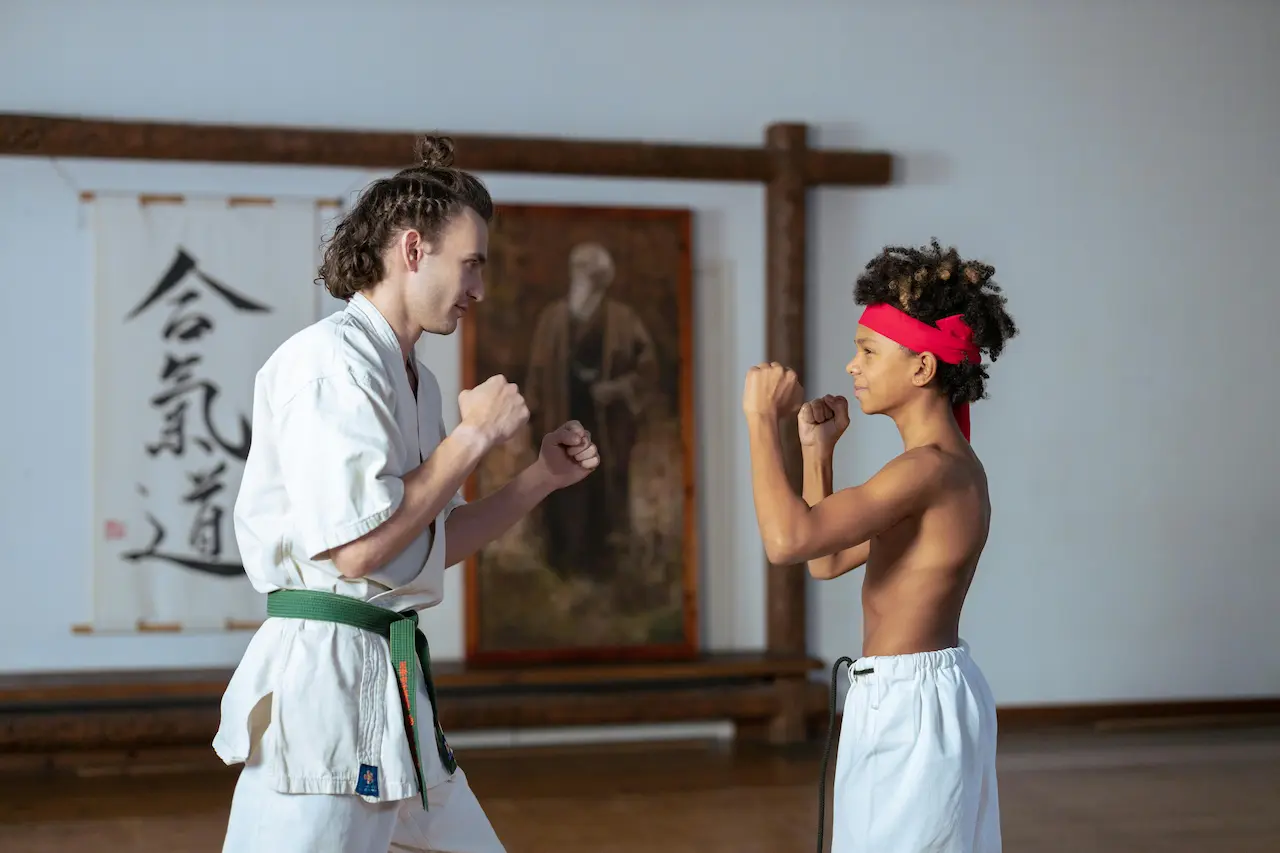
Karate classes for children follow a predictable structure that helps kids feel secure and engaged. Sessions typically begin with warm-ups, followed by drills and skill practice that build progressively over time.
Instructors often incorporate games and playful exercises to teach techniques in ways that feel fun rather than intimidating.
Clear rules and expectations are established from the start, helping children understand boundaries and the importance of respect.
Instructors provide consistent positive reinforcement, celebrating small victories and encouraging continued effort.
Classes are typically designed to be age-appropriate, with instruction tailored to different developmental stages so that younger children aren’t overwhelmed and older kids remain challenged.
Immediate Benefits for Young Practitioners
Parents may notice changes in their children within the first few months of training. Enhanced listening skills may become apparent as kids learn to follow complex, multi-step instructions during drills.
Confidence builds through consistent repetition. Each successfully executed move or earned belt reinforces a child’s belief in their abilities. Group classes help children become more comfortable in structured environments, which may support better classroom behavior and social interactions.
The emphasis on respect for authority figures and fellow students creates a culture of mutual consideration. Physically, children may develop improved gross motor skills, better balance, and enhanced coordination through regular practice.
Prioritizing Safety and Addressing Injury Concerns
Safety is a primary concern for any parent considering karate, and reputable schools take this responsibility seriously. Training occurs in highly controlled, supervised environments where instructors monitor students closely.
Instruction is carefully adjusted based on each child’s age and skill level, ensuring that expectations remain appropriate.
Beginner classes typically involve limited or no physical contact, allowing children to build confidence and technique before any sparring is introduced.
The curriculum emphasizes control, proper technique, and avoiding movements that could lead to injury. While many instructors pursue first aid training, requirements vary by school and organization, so parents should ask about specific safety protocols and instructor qualifications when evaluating programs.
Choosing the Right Karate School for Your Child
Not all karate schools are created equal, and finding the right fit requires some research. Start by observing how instructors communicate with children.
Do they speak clearly, offer encouragement, and maintain appropriate boundaries?
Watch how they handle mistakes or behavioral issues to gauge their teaching philosophy. Class size matters for ensuring adequate individual attention.
Smaller classes allow instructors to provide personalized feedback and catch potential safety issues quickly.
You should check whether or not the school separates classes by age group, as this optimization supports better learning outcomes. Also, confirm that the school has clear safety protocols, including the use of appropriate protective gear when necessary.
Review the curriculum to understand how it progresses and whether it aligns with your goals for your child’s development.
Is Karate a Good Fit for Every Child?
Karate works well for many children, but it’s not necessarily the perfect activity for everyone. I’ve seen plenty of kids that it’s simple not a fit for.
I will say that children who naturally thrive on structure and routine often excel quickly, responding well to the clear expectations and predictable class format.
However, children who are shy or have high energy levels may need an adjustment period as they adapt to the environment. One of karate’s strengths is its emphasis on individual progress rather than competition with peers.
This approach benefits children with diverse personalities and learning styles, as success is measured by personal growth rather than comparison to others.
The Data on Karate’s Benefits for Children
According to the U.S. Department of Health and Human Services, children and adolescents aged 6 through 17 years should engage in 60 minutes or more of moderate-to-vigorous physical activity daily, which offers benefits such as improved bone health, cognitive function, and reduced risk of depression. Karate provides an engaging way for children to meet this recommendation through structured, skill-based activity.
A meta-analytic review published in Educational Psychology Review found a positive relationship between physical activity and cognitive function, including improved attention and academic achievement, in children. This research supports what many parents observe—that regular karate practice may complement academic learning by strengthening concentration and mental discipline.
Many martial arts schools offer programs for children as young as 4-5 years old, with classes tailored to their developmental stage, according to Healthline’s guidance on starting martial arts. Attending classes 2-3 times per week is generally recommended for consistent progress and skill retention, though schedules can be adjusted based on family needs and a child’s age.
Note: Data specifically from the National Council on Youth Sports Safety regarding injury rates in martial arts compared to other youth sports was not found during this fact-check.
Here’s an Example Scenario
A parent notices their 7-year-old, Leo, struggles with focus during homework and is often shy in group settings. After enrolling Leo in a local karate class, they observe a gradual but significant change.
Leo starts listening more attentively, proudly showing off his new belts, and initiating conversations with other kids in class, demonstrating newfound confidence both in the dojo and at home.
Frequently Asked Questions
What is the best age for a child to start karate?
Most schools offer programs for children as young as 4-5 years old, with classes tailored to their developmental stage. The “best” age often depends on a child’s readiness for structured learning and ability to follow instructions.
What if my child is shy or not very athletic?
Karate is excellent for shy children as it builds confidence through individual achievement and a supportive group environment. It’s also suitable for all athletic abilities, as progress is personal and focuses on discipline and technique over raw strength.
How often should my child attend karate classes?
Typically, attending 2-3 classes per week is recommended for consistent progress and skill retention. However, schedules can vary, and even once a week can offer benefits for very young children.
Will karate help my child with self-defense?
Yes, karate teaches practical self-defense techniques. More importantly, it instills situational awareness, discipline, and the confidence to de-escalate conflicts or, if necessary, defend themselves responsibly.
Are there different styles of karate, and does it matter for kids?
Yes, there are many styles (e.g., Shotokan, Goju-ryu). For kids, the specific style is less critical than finding a school with qualified instructors, a positive environment, and a curriculum focused on character development and safety.
What equipment does my child need to start karate?
Initially, most schools require only a basic uniform (called a gi). As children advance, they may need sparring gear like gloves, shin guards, and mouthguards, especially if their program involves controlled sparring.